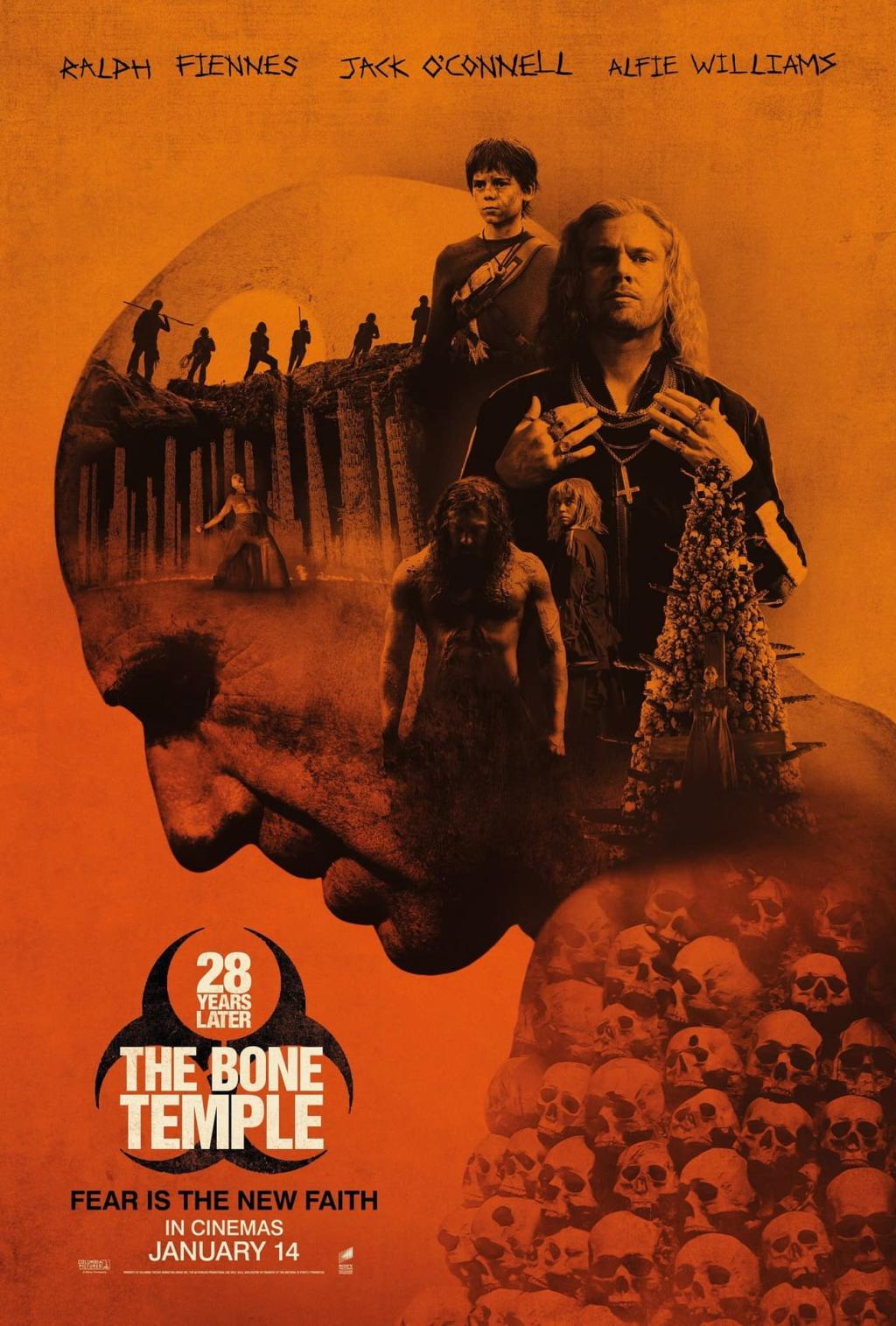

So, let’s get this out of the way – this movie is already six months old. These reviews are going to be for films (and other media!) that are new to me, and they’ll be as regular as I can manage, just to keep the content mill a-churnin’.
So. 28 Years Later: The Bone Temple. Sequel to 2025’s 28 Years Later, and 4th film in the 28 Days Later franchise. What to make of it? It’s kind of an odd beast, taking as its jumping-off point the tonally-dissonant and frankly annoying ending of 28 Years Later, which sees Spike (Alfie Williams), the child who had decided to strike out on his own at the film’s denoument, kidnapped and initiated into the post-apocalyptic gang/cult of Sir-Lord Jimmy (a magnetic and wicked Jack O’Connell). Spike’s story is paralleled with the continuing adventures of Dr Ian Kelson (Ralph Fiennes), as he bonds with Samson (Chi Lewis-Parry), the Alpha infected he keeps sedated so he doesn’t get his skull caved in. On paper, a sequel which picks up directly after the first film ands and picks up on the same loose plot threads, written by the same screenwriter as the previous film (Alex Garland) should be a slam dunk, right?
Which just goes to show how important a confident and innovative director is to the success of a film like this. Danny Boyle’s stylistic flourishes from 28 Days Later (herky-jerky motion, night-vision, ominous analogue textures) are nowhere to be found here. Instead, Nia Dacosta directs this film in a manner that I can generously describe as competent, but unremarkable. No particular standout techniques, but no huge fumbles.
I really appreciated the commitment to weird and unconventional narrative turns, and the devotion to gruesome and practically-achieved gore. However, when the direction is as un-preposessing as this, it’s harder to paper over the flaws in pacing, character behaviour, and theme that this movie ends up with.
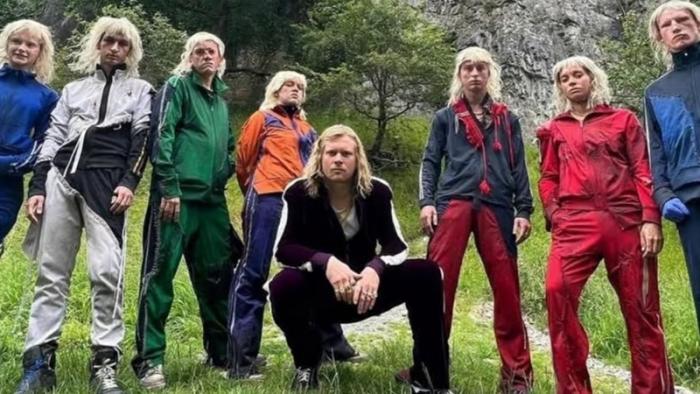
It starts out strong, with Spike initiated into Jimmy’s Fingers in a scene of brutal violence that reminds us that this is not a franchise where our heroes gun down or dismember their enemies with frankly-implausible martial skill and composure. It’s a grittier, nastier world than that, where violence is unpredictable, random, and horrifying for victim and perpetrator alike. (I will say, one thing this movie has going for it is that it’s not afraid to put a child protagonist in morally appalling and physically gruesome situations – a plus for any horror movie, but especially a zombie movie).
But what follows is a somewhat meandering first half, where Spike is dragged along with the Jimmies as they brutalize and torture a group of zombie-apocalypse survivors who would be the protagonists of a more typical entry in the genre. I appreciate the structural weirdness here, and the topsy-turvy point of view – our protagonist is seeing everything from the perspective of the villains, and maybe even being corrupted by it. I also appreciate the gruesome gore. But we don’t spend very much time with this group of unlucky survivors, so it’s hard to be invested in their fates.
This narrative is twinned with that of Dr. Kelson as he tries to tame the gigantic and fearsome Samson, the primary infected antagonist from the previous film, who is still lumbering around the woods tearing people’s spinal columns from their bodies with his cock out. This section of the movie hinges on Ralph Fiennes’ performance, but it’s not all that exciting. It also hinges on his character doing things that are, frankly, pretty stupid.
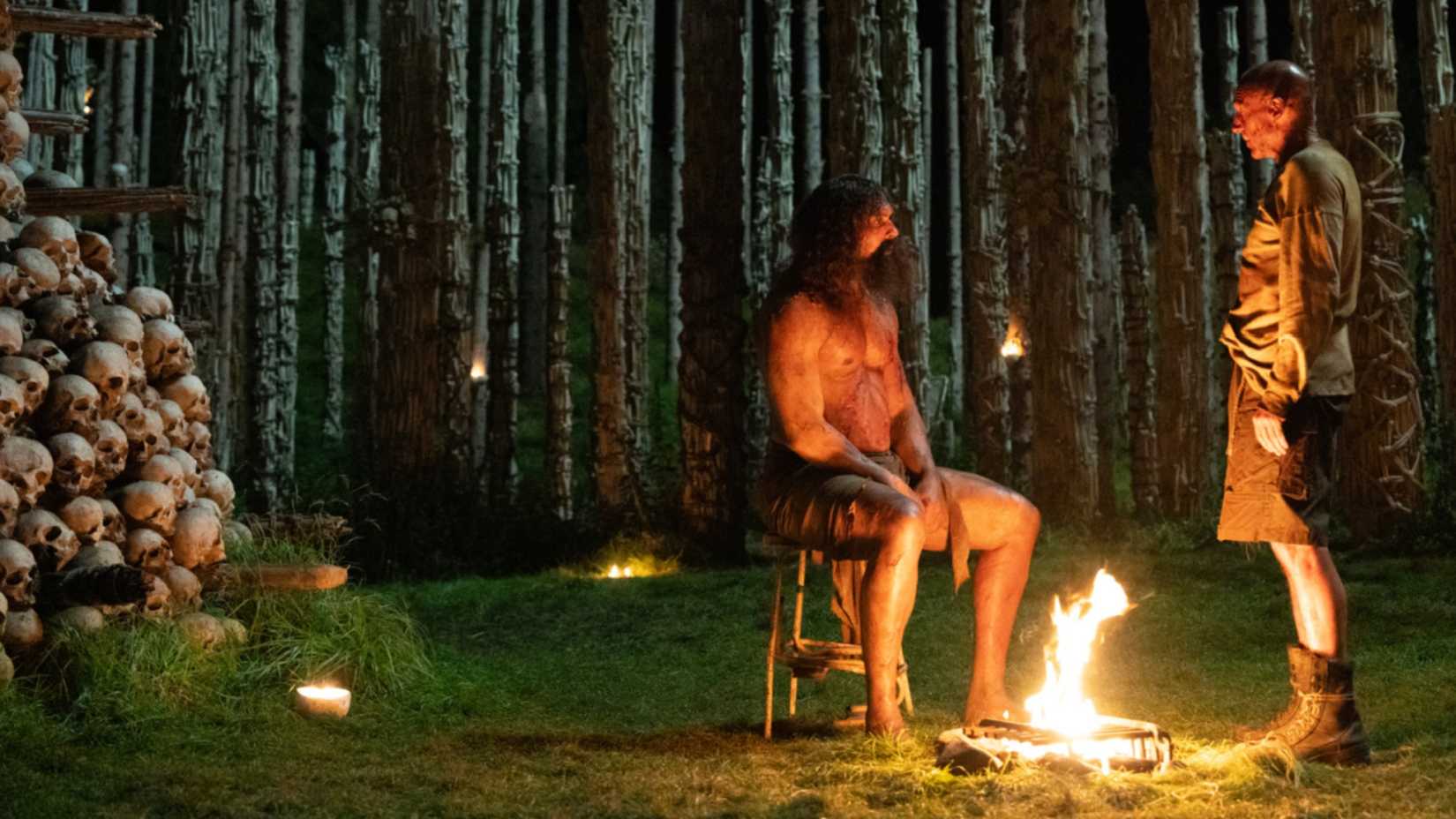
In fact, this movie features a lot of characters doing things that seem very ill-advised, the kinds of things that make you want to scream “why are you doing that?!” In a better horror movie (like the one that preceded this!), those objectively bad decisions are excusable or understandable by a character’s established motivations and psychology. But most of the characters in this movie don’t have clear enough characterization for that to be a factor. Does Dr. Kelson kind of want to die? Is that why he does opiates next to a sedated-but-still-murderous zombie man? Why does a woman wait until three of her four friends have been tortured to death, and the fourth already fatally wounded in a knife-fight, before she acts? How much do the Jimmies really believe that their leader and messiah is the son of “Old Nick?” None of these questions get a satisfactory answer.
(That said, the cast of this movie are doing uniformly great work – particularly Fiennes’ wry and compassionate doctor, and O’Connel’s charismatic psycho Jimmy.)
The two parallel narratives dovetail when one of Jimmy’s Fingers mistakes Kelson for “Old Nick” himself, which leads to a delirious climax set to Iron Maiden’s “Number of the Beast”, which is a much-needed electrifying jolt this late in the proceedings. However, what this climax has in pyrotechnics and violence it lacks in something that made the previous film moving, elegaic, and strangely melancholy – theme.
The themes of 28 Years Later are delicately but unambiguously stated through the actions and arcs of all the major characters: there is no going back to the way things were. We must accept change – including death, the most final change of all.
What is the theme of this movie? I couldn’t begin to guess.
However, I’ll admit that I was sometimes baffled, but not bored, and the denouement did make me want to see where Danny Boyle will choose to land the plane if he is able to make the lampshaded threequel.
 Jeremy Large Writing & Consulting Services
Leave a comment